
Blepharoplasty (Eyelid Surgery)
Arsenault Aesthetics > Services > Cosmetic Surgery > Blepharoplasty

What is Blepharoplasty?
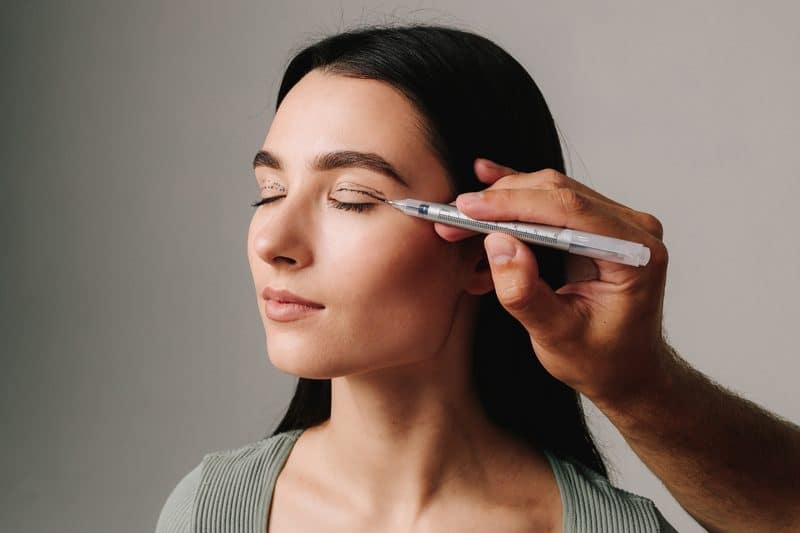
Blepharoplasty, also called eyelid surgery or an eyelid lift, removes excess skin and, when needed, small amounts of fat from the upper eyelids. The result is a brighter, more rested look that still looks like you.
At Arsenault Aesthetics in Lakewood Ranch, upper blepharoplasty is performed in our office under local anesthetic by Dr. Jennifer Brammeier, a double board-certified dermatologic surgeon. There is no hospital stay and no general anesthesia, and every patient starts with a complimentary consultation.
As we age, the skin of the eyelids stretches and loses elasticity, the muscles that support the lids weaken, and fat around the eyes can shift forward. Together, these changes create heavy, hooded upper lids and a tired look that makeup and creams cannot fix. Upper blepharoplasty corrects these changes at their source for natural, lasting results.
Blepharoplasty Fast Facts
| Question | Answer |
|---|---|
 Benefits |
1. Lifts droopy, hooded upper lids 2. Restores a defined eyelid crease 3. Brighter, more rested look |
 AVG Cost |
Personalized quote given at your complimentary consultation |
 Downtime |
About 7 to 10 days before most people return to work |
 Anesthetic Used? |
Yes - local anesthetic, performed in office |
 Treatment Areas |
Upper eyelids |
 Duration |
Long-lasting, often many years |
Blepharoplasty FAQ
What is blepharoplasty eyelid surgery?
Blepharoplasty is the medical name for eyelid surgery. It removes excess skin, and sometimes fat, from the upper eyelids to correct droopy, heavy, or hooded lids. Many people call it an eyelid lift or simply "bleph" surgery. At Arsenault Aesthetics in Lakewood Ranch, upper eyelid surgery is performed in our office under local anesthetic by Dr. Jennifer Brammeier, a double board-certified dermatologic surgeon. The goal is a brighter, more rested look that still looks like you.
What is eyelid surgery called?
Eyelid surgery is called blepharoplasty. You may also hear it called an eyelid lift, eye lift, bleph, or eyelid reduction surgery. Upper blepharoplasty treats the upper lids, and lower blepharoplasty treats the area under the eyes. At Arsenault Aesthetics, Dr. Brammeier performs upper blepharoplasty to remove the extra skin that makes the eyes look heavy or tired.
What is the difference between upper and lower eyelid surgery?
Upper eyelid surgery removes excess skin, and sometimes a small amount of fat, from the upper lids to correct drooping and hooding. Lower eyelid surgery treats bags, puffiness, and loose skin under the eyes. At Arsenault Aesthetics, Dr. Brammeier performs upper eyelid surgery. It is often the right choice if your lids feel heavy, your eyeshadow disappears into the crease, or extra skin rests on your lashes. For under eye bags and hollows, our team offers non-surgical options such as PRF under eye treatment and dermal fillers.
Is an eyelid lift the same as blepharoplasty?
Yes. An eyelid lift is the everyday name for blepharoplasty. The procedure does not literally lift the eyelid. Instead, it removes the extra skin and tissue that weighs the lid down, which makes the eye look more open. If your brows have dropped and are pushing down on your lids, a brow lift may be part of your plan as well.
Am I a good candidate for eyelid surgery?
You may be a good candidate if you have heavy or hooded upper lids, excess skin that touches your lashes, or a tired look that creams and makeup cannot fix. Good candidates are in generally good health, do not smoke, and have realistic goals. Some eye conditions, such as severe dry eye, need extra evaluation first. Dr. Brammeier reviews your health history and examines your eyelids, brows, and skin at your complimentary consultation to confirm whether blepharoplasty is right for you.
How is blepharoplasty performed?
After the area is numbed with a local anesthetic, Dr. Brammeier makes a precise incision hidden in the natural crease of the upper eyelid. She removes or repositions excess skin, muscle, and fat, then closes the incisions with fine sutures. You go home the same day.
Who performs eyelid surgery at Arsenault Aesthetics?
Eyelid surgery at Arsenault Aesthetics is performed by Dr. Jennifer Brammeier, DO, FAAD, FACMS, FASDS, a double board-certified dermatologic surgeon. She specializes in Mohs surgery and complex closures on the face, where precise, delicate work and discreet scars matter most. Choosing an experienced eyelid surgeon is one of the most important decisions you will make, because the eyelid skin is the thinnest on the body. Dr. Brammeier sees patients at our Lakewood Ranch office, serving Sarasota, Bradenton, and the surrounding area.
Where can I get blepharoplasty in Lakewood Ranch?
Dr. Jennifer Brammeier performs upper blepharoplasty at Arsenault Aesthetics in Lakewood Ranch, located at 9023 Town Center Pkwy, Lakewood Ranch, FL 34202. Our office is near University Park and an easy drive from Sarasota, Bradenton, and Parrish. Eyelid surgery is done right in our office under local anesthetic, so there is no hospital visit. Call (941) 264-1161 to schedule your complimentary consultation.
How much does blepharoplasty cost?
The cost of blepharoplasty depends on the amount of correction you need and whether it is combined with a brow lift. Because Dr. Brammeier performs eyelid surgery in our office under local anesthetic, you avoid the hospital, operating room, and general anesthesia fees that can add thousands of dollars in other settings. You will receive a personalized quote at your complimentary consultation.
Is blepharoplasty covered by insurance?
No. Arsenault Aesthetics does not accept insurance, so eyelid surgery is self-pay. Insurance has sometimes covered upper eyelid surgery when sagging skin blocks your vision, but insurance requirements have become much stricter, and most patients no longer qualify. Because Dr. Brammeier performs the procedure in our office under local anesthetic, you avoid hospital and general anesthesia fees. You will receive a clear, upfront price at your complimentary consultation.
Is the consultation free?
Yes. Every eyelid surgery patient starts with a complimentary consultation with Dr. Brammeier. She will talk with you about your goals, examine your eyelids and brows, explain which approach she recommends, and give you a clear plan and personalized quote. There is no obligation to book.
Am I awake during eyelid surgery?
Yes. Your eyelids are numbed with a local anesthetic, so you are awake but comfortable. No sedation or general anesthesia is used. Most patients feel pressure or movement, not pain. Being awake means no general anesthesia, no breathing tube, and a quicker, easier recovery from the anesthesia itself. Many patients are surprised by how calm the experience feels.
Does blepharoplasty hurt?
Blepharoplasty should not hurt during the procedure, because the local anesthetic numbs the area. You will feel a quick pinch and sting from the numbing injection, then mostly pressure. Afterward, most patients describe mild soreness, tightness, or a gritty feeling rather than real pain. Cold compresses and over-the-counter pain relievers, such as Tylenol, usually keep you comfortable. Avoid ibuprofen and aspirin unless Dr. Brammeier approves them, because they can increase bruising.
How long does eyelid surgery take?
Upper eyelid surgery usually takes about one to two hours. Because the procedure is done in our office, there is no hospital check-in or long wait in a recovery room. You go home the same day, but you will need someone to drive you.
Is eyelid surgery safe?
Eyelid surgery is considered very safe when performed by a qualified, experienced surgeon. As with any surgery, there are possible risks, including bruising, swelling, dry or irritated eyes, temporary blurred vision, infection, uneven results, and scarring. Serious complications are rare. Performing the procedure under local anesthetic also avoids the risks that come with general anesthesia. Dr. Brammeier will review your health history and explain the risks in detail at your consultation.
What age is best for eyelid surgery?
There is no single best age for eyelid surgery. Most patients are in their 40s to 70s, when skin naturally loses elasticity and the lids begin to droop. Some younger patients with inherited heavy or hooded lids also benefit. The right time is when your eyelids bother you and you are in good overall health.
What is the recovery time for blepharoplasty?
Most patients return to work and normal daily activities in about 7 to 10 days. Swelling and bruising are most noticeable in the first 48 hours and usually fade within two to three weeks. Your eyes may feel tight, dry, or watery for a short time. Scars continue to soften over several months, and your final result is visible once all the swelling settles.
When are stitches removed after eyelid surgery?
Sutures are usually removed about 5 to 7 days after eyelid surgery during a short follow-up visit. Some techniques use dissolvable sutures that do not need removal. Dr. Brammeier will let you know which type she used and when to come back.
How can I reduce swelling and bruising after blepharoplasty?
Apply cold compresses gently for the first 48 hours, keep your head elevated, and rest. Dr. Brammeier also recommends arnica and bromelain, natural supplements that can help reduce swelling and bruising. She will tell you when to start them and how much to take. Sleep on your back with extra pillows. Avoid alcohol, smoking, salty foods, and blood thinners such as aspirin, ibuprofen, fish oil, and vitamin E unless your doctor approves them. Following these steps can help you heal faster and look like yourself sooner.
When can I sleep on my side after blepharoplasty?
Sleep on your back with your head elevated for at least the first week. Most patients can return to side sleeping after about one to two weeks, once Dr. Brammeier confirms you are healing well. Sleeping elevated helps fluid drain away from the eyes, which reduces swelling.
When can I wear contact lenses and eye makeup after eyelid surgery?
Most patients can return to contact lenses in about two weeks, and to eye makeup once the incisions have fully closed, usually around 10 to 14 days. Wear your glasses in the meantime. Starting too soon can irritate the incisions or introduce bacteria. Dr. Brammeier will clear you at your follow-up visit.
When can I exercise after eyelid surgery?
Light walking is encouraged in the first few days to support healing. Avoid strenuous exercise, heavy lifting, swimming, and bending over for about two weeks, because these can raise pressure in the face and increase swelling or bleeding. Most patients return to their full workout routine in two to three weeks.
Will I have visible scars after eyelid surgery?
Scars from eyelid surgery are usually very hard to see once healed. The incision is hidden in the natural crease of the upper eyelid. As a dermatologic surgeon who specializes in complex closures, Dr. Brammeier takes great care with every incision. Scars are pink at first and fade to a fine, barely noticeable line over several months. Wearing sunglasses and sunscreen helps them heal well in the Florida sun.
How long does blepharoplasty last?
Blepharoplasty results are long-lasting. The skin and fat that are removed do not come back. Upper eyelid results often last 10 years or more. Natural aging continues, so some patients consider a touch-up years later, but most enjoy a more rested, youthful look for many years.
Do you offer eye bag surgery or lower eyelid surgery?
No. Dr. Brammeier performs upper eyelid surgery, which treats heavy, hooded, and droopy upper lids. Lower eyelid surgery, sometimes called eye bag surgery, is not offered at Arsenault Aesthetics. For under eye concerns, our team offers non-surgical treatments that can help. PRF under eye treatment and dermal fillers can soften hollows and dark circles, and CO2RE laser resurfacing can tighten thin, crepey skin. We can recommend the best option at your complimentary consultation.
Can eyelid surgery fix hooded or droopy eyelids?
Yes, when the hooding or drooping comes from excess eyelid skin. Upper blepharoplasty removes that skin to restore a visible crease, open the eye, and, in some cases, improve the upper field of vision. If the heaviness comes from a low brow, a brow lift may be the better choice. A drooping lid margin itself, called ptosis, is a different condition that needs a different repair. Dr. Brammeier looks at the whole upper face to find the true cause.
Should I get a brow lift or blepharoplasty?
It depends on what is causing the heaviness. If extra eyelid skin is the main issue, blepharoplasty is the answer. If your brows have dropped and are pushing skin down onto your lids, a brow lift may help more. Many patients benefit from both, done together for a balanced, natural result. A simple test: gently lift your brows with your fingertips in the mirror. If your eyes look the way you want, a brow lift may be part of your plan.
Is there a non-surgical alternative to eyelid surgery?
For mild changes, non-surgical treatments can improve the eye area. Botox can soften crow's feet and give the brow a subtle lift. PRF under eye treatment and dermal fillers can improve hollowness and dark circles. CO2RE laser resurfacing can tighten crepey skin. These options cannot remove excess skin or fat the way surgery can, so heavy or hooded upper lids usually need blepharoplasty.
Can I combine eyelid surgery with other treatments?
Yes. Blepharoplasty is often combined with a brow lift for a full upper face refresh. Once you have healed, treatments such as Botox, laser resurfacing, and medical-grade skin care can help maintain your results and improve the skin around your eyes. Our team can build a plan that fits your goals and timeline.
How Blepharoplasty Works
After the area is numbed with a local anesthetic, Dr. Brammeier makes precise incisions that follow the natural lines of the eyelid. She removes or repositions excess skin, muscle, and fat, then closes the incisions with fine sutures.
Because the incisions sit in the natural crease of the upper lid or just below the lash line, scars are designed to be hidden and typically fade to be barely visible.
Heavy upper lids are sometimes caused by a brow that has dropped over time, not only by extra eyelid skin. Dr. Brammeier looks at the whole upper face during your consultation and may recommend a brow lift, or a brow lift combined with blepharoplasty, for the most natural result.
What to Expect
Your consultation: Every blepharoplasty begins with a complimentary consultation. Dr. Brammeier will talk with you about your goals, review your health history, examine your eyelids, brows, and surrounding skin, and explain which approach she recommends. You will leave with a clear plan and personalized quote.
Before surgery: You will receive instructions to prepare. These typically include stopping certain medications and supplements that can increase bruising (only with your doctor’s approval), avoiding alcohol and smoking, and arranging for someone to drive you home.
The day of your procedure: Your procedure is performed in our Lakewood Ranch office, not a hospital. Dr. Brammeier numbs the area with a local anesthetic so you stay comfortable. You are awake but should feel only pressure, not pain. Upper blepharoplasty typically takes about one to two hours. You go home the same day.
Recovery: Swelling and bruising are most noticeable in the first 48 hours. Sutures are usually removed in 5 to 7 days, most people return to work in about 7 to 10 days, and most bruising fades within two to three weeks. Avoid strenuous exercise, heavy lifting, and bending over for about two weeks, wear sunglasses outdoors, and skip contact lenses and eye makeup until cleared.
Results: You will see an improvement as swelling settles, with your final result visible after a few months. Removed skin and fat do not come back, so most patients enjoy their results for many years.
Pricing: Cost depends on the amount of correction you need and whether it is combined with a brow lift. Because the procedure is performed in our office under local anesthetic, you avoid the hospital and general anesthesia fees that come with many surgical settings. You will receive a personalized quote at your complimentary consultation.
Types of Blepharoplasty
Blepharoplasty is tailored to your anatomy and goals. Dr. Brammeier will recommend the approach that fits you best at your complimentary consultation.
Upper eyelid surgery removes the extra skin that folds over the crease and makes the lids look heavy or hooded. For some patients, sagging upper lid skin rests on the lashes or blocks part of their side vision. Upper blepharoplasty opens the eyes, restores a defined crease, and can make it easier to see and apply makeup.
Dr. Brammeier focuses on upper eyelid surgery and does not perform lower eyelid surgery. For under eye bags, hollows, and dark circles, our team offers non-surgical treatments such as PRF under eye treatment, dermal fillers, and CO2RE laser resurfacing. These can refresh the under eye area with little or no downtime.
Blepharoplasty is a good option if you have droopy or hooded upper eyelids, or excess upper lid skin that touches the lashes or blocks your side vision. Good candidates are in good overall health, do not smoke (or are willing to stop before and after surgery), have no serious eye conditions, and have realistic expectations. It is popular with both women and men.
Heavy upper lids are sometimes caused by a drooping brow rather than extra eyelid skin. In that case, a brow lift, or a brow lift combined with blepharoplasty, may give a better result. Dr. Brammeier evaluates the whole upper face so you get the right procedure.
Dr. Jennifer Brammeier is a double board-certified, fellowship-trained Mohs surgeon who has performed thousands of skin cancer surgeries, many of them on the face, eyelids, nose, ears, and forehead. Repairing these delicate areas after skin cancer removal requires precise, complex closures that heal well and look natural. That same skill set is what makes for refined, natural-looking cosmetic results with discreet scars. Meet Dr. Brammeier.
What Our Clients Say


Interested in Blepharoplasty? You May Also Like:

Treat fine lines & wrinkles

Highly effective laser resurfacing
Add volume to your cheeks, lips, chin & jaw

Restore volume and improve skin quality

Ultrasound skin tightening and lifting

Non-surgical lifting of the face

Gradually restore volume & collagen

Deep pore cleansing and hydration