If you’re researching Sofwave vs XERF in Lakewood Ranch, you’re likely focused on one key question: what kind of results can you expect, and how consistent are they?
Both technologies aim to improve skin laxity and stimulate collagen, but they differ in how they deliver energy and how outcomes develop over time.
At Arsenault Aesthetics, we evaluate treatments based on:
- Expected outcomes over time
- Clinical support
- Safety profile
How Each Technology Works
Radiofrequency (XERF)
Radiofrequency technologies use electrical energy to heat tissue. Depending on the device and settings, energy may reach different depths and results can vary.
Ultrasound (Sofwave)
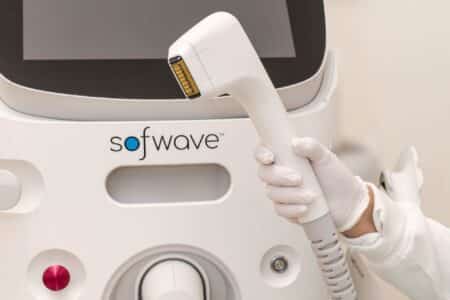
Sofwave delivers ultrasound energy at a controlled depth in the mid-dermis, allowing for targeted collagen stimulation and consistent energy delivery.
How Results Develop Over Time
Non-invasive skin tightening relies on collagen remodeling, which occurs gradually.
- Early changes within several weeks
- Continued improvement over 3–6 months
- Results that may last 12 months or longer
Clinical Evidence and Predictability
- Numerous peer-reviewed studies
- Documented collagen and elastin response
- A longer clinical track record
XERF is a newer technology with an expanding evidence base.
Safety Considerations: A Focus on Facial Volume
Maintaining natural facial volume is a key priority in modern aesthetic treatments. Sofwave has been positioned with a strong safety profile focused on preserving underlying tissue structures.
FDA Clearance and Intended Use
Sofwave is FDA-cleared for facial lines and wrinkles, eyebrow lifting, and submental and neck lifting.
XERF is currently cleared for electrocoagulation and hemostasis.
Frequently Asked Questions
What exactly is each device FDA-cleared for?
Sofwave is FDA-cleared for improvement of facial lines and wrinkles and lifting of the eyebrow, submental, and neck areas. XERF is currently cleared for electrocoagulation and hemostasis.
How much clinical evidence supports each treatment?
Sofwave is supported by numerous peer-reviewed publications and has an established clinical track record. XERF is a newer technology with a developing body of clinical evidence.
Is there biopsy data confirming collagen remodeling?
Sofwave has published biopsy-based data demonstrating collagen and elastin response following treatment, supporting its mechanism of action.
What results should I expect at 3, 6, and 12 months?
Results typically develop gradually over several months as collagen remodeling occurs, with continued improvement often seen between 3 and 6 months. Many patients maintain results for 12 months or longer.
Is facial fat loss a concern with these treatments?
Maintaining natural facial volume is an important consideration in aesthetic treatments. Sofwave has been positioned with a strong safety profile, including a focus on preserving underlying tissue structures.
How does Sofwave differ from XERF?
Sofwave uses ultrasound energy to deliver heat at a controlled depth in the mid-dermis, where collagen production occurs. XERF uses radiofrequency energy, which can heat tissue more broadly depending on device settings and technique.
Final Takeaway
When comparing Sofwave vs XERF, understanding how results develop, and how consistently they are delivered, is key. Differences in energy delivery, clinical validation, and FDA-cleared indications can all influence treatment selection.
A consultation at Arsenault Aesthetics can help determine which approach aligns best with your goals.